
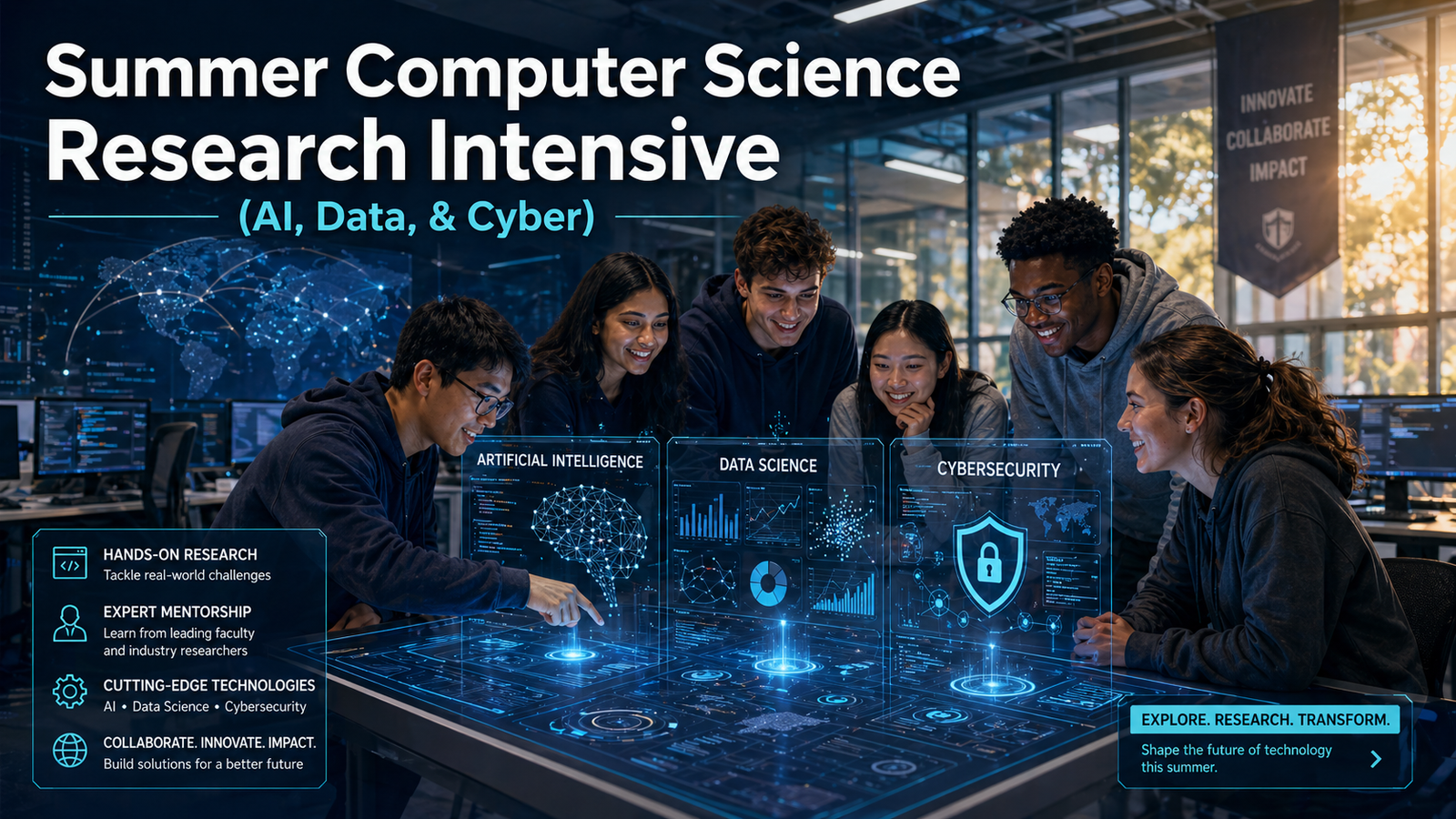
Summer Computer Science Research Programs
Unlock Your Future: The Ultimate Guide to Summer Computer Science Research Programs
In today's rapidly evolving technological landscape, a Summer Computer Science Research Program offers an unparalleled opportunity for ambitious high school and undergraduate students to gain hands-on experience, deepen their understanding of cutting-edge fields, and significantly enhance their academic and career trajectories. For students in India, the US, UK, and Australia, these programs are more than just summer activities; they are gateways to innovation, critical thinking, and future success.
Why Dive into Computer Science Research?
The allure of computer science lies in its power to solve complex problems and shape the future. A research program provides a structured environment to explore this potential deeply.
Beyond the Classroom: What Research Offers
Standard academic curricula often provide a broad overview. Research programs, however, allow students to delve into specific sub-fields, tackle real-world challenges, and contribute to novel discoveries. This hands-on engagement fosters a level of understanding and skill development that is difficult to achieve through coursework alone. Students learn to formulate hypotheses, design experiments, analyze data, and communicate complex findings – essential skills for any aspiring scientist or engineer.
The Competitive Edge for Higher Education
For students aiming for top universities, participation in a reputable Summer Computer Science Research Program is a significant differentiator. It demonstrates initiative, intellectual curiosity, and a genuine passion for the field. Admissions committees recognize that students who have engaged in research have a more mature understanding of their chosen discipline and are better prepared for the rigors of university-level study. Furthermore, the experience can lead to strong recommendation letters from research mentors, providing invaluable insights into a student's capabilities.
Understanding the Spectrum of CS Research Programs
The field of computer science is vast, and so are the research opportunities available. Understanding the different areas and formats can help students find the best fit.
Core Research Areas: AI, ML, Data Science, and Beyond
Modern computer science research spans numerous exciting domains:
- Artificial Intelligence (AI) & Machine Learning (ML): Exploring areas like natural language processing (NLP), computer vision, reinforcement learning, and predictive modeling. Students might work on developing algorithms for image recognition or building chatbots.
- Data Science: Analyzing large datasets to extract meaningful insights, build predictive models, and visualize complex information. This is crucial for fields ranging from finance to healthcare.
- Cybersecurity: Investigating methods to protect systems, networks, and data from unauthorized access and attacks. Research might involve cryptography, network security, or vulnerability analysis.
- Software Engineering & Systems: Focusing on the design, development, testing, and maintenance of software and computing systems. This could involve performance optimization, distributed systems, or operating system research.
- Computational Biology & Bioinformatics: Applying computational techniques to biological data, such as genomic sequencing analysis or drug discovery simulations.
- Human-Computer Interaction (HCI): Designing and studying how humans interact with computers, aiming to create more intuitive and effective user interfaces.
- Robotics: Developing intelligent machines capable of performing tasks autonomously or semi-autonomously, involving areas like control systems, perception, and planning.
Program Formats: University-Affiliated, Independent Projects, and Virtual Options
Research programs vary in structure:
- University-Affiliated Programs: Often hosted by major universities (e.g., MIT, Stanford, Berkeley, Columbia in the US; Oxbridge in the UK; ANU in Australia), these programs connect students with faculty researchers and existing lab projects. They can be highly competitive.
- Independent Research Projects: Some programs facilitate students working on their own proposed projects under the guidance of a mentor, often culminating in a presentation or paper.
- Online/Virtual Programs: Increasingly popular, these offer flexibility and accessibility, allowing students to participate from anywhere. They often involve remote collaboration with mentors and access to cloud computing resources.
Navigating Global Summer Computer Science Research Programs
The pursuit of knowledge knows no borders. Students from India, the US, UK, and Australia have a wealth of global opportunities.
Premier Programs in the US: A Glimpse at Top Institutions
The United States is home to many world-renowned institutions offering prestigious research programs. While highly competitive, programs at universities like MIT (e.g., RSI, PRIMES), Stanford, UC Berkeley, and Columbia provide unparalleled exposure to cutting-edge research. These often require strong academic records and demonstrated interest in specific CS fields.
Opportunities in the UK and Australia
The UK boasts excellent research opportunities at institutions like Cambridge, Oxford, and Imperial College London. Similarly, Australia's leading universities, such as the University of Sydney and the University of Melbourne, offer robust research programs, particularly within their engineering and computer science faculties. These programs often emphasize project-based learning and collaboration.
Pathways for Indian Students: Domestic and International
Indian students have excellent options both within India and abroad. Institutions like IITs, IISc, and TIFR offer high-quality research internships. For international opportunities, programs like the Research Internship in Science and Engineering (RISE) Germany, or various summer research fellowships in the US, UK, and Australia are popular. Many programs are actively seeking diverse international talent.
The Rise of Online and Virtual Research Experiences
The digital age has democratized access to research. Online platforms and virtual programs allow students to collaborate with mentors and peers globally without the need for relocation. These programs often focus on specific skills or project outcomes and are a fantastic option for those seeking flexibility or facing geographical constraints.
Choosing Your Ideal Summer Computer Science Research Program
With so many options, selecting the right program is crucial for a rewarding experience.
Aligning Interests with Program Focus
Reflect on your specific interests within computer science. Are you fascinated by AI's potential, the intricacies of cybersecurity, or the power of data? Research programs that align with these passions will be more engaging and productive. Look at the specific projects offered or the research areas of the faculty involved.
Evaluating Faculty Expertise and Research Labs
The quality of mentorship is paramount. Investigate the faculty members associated with the program. What are their research specializations? Have they published significant work? Understanding the research environment and the expertise of the mentors will give you confidence in the program's academic rigor.
Understanding Eligibility: Prerequisites and Academic Standing
Programs have varying eligibility criteria. Most require a strong academic record (GPA), specific prerequisite coursework (e.g., calculus, discrete mathematics, introductory programming), and often target students in specific grade levels (e.g., rising juniors/seniors for high school programs, or specific undergraduate years). Carefully review these requirements to ensure you meet them before applying.
The Application Journey: Securing Your Research Spot
Applying to competitive research programs requires careful preparation and a strategic approach.
Crafting a Standout Personal Statement
Your personal statement or essay is your opportunity to showcase your passion, explain your motivations for pursuing research, and highlight relevant experiences. Be specific about why you are interested in *this particular* program and how your skills and aspirations align with its goals. Authenticity and clarity are key.
The Crucial Role of Recommendation Letters
Strong recommendation letters from teachers or mentors who know your academic abilities and work ethic well can significantly boost your application. Choose recommenders who can speak to your potential in computer science and research. Provide them with ample time and information about the programs you're applying to.
Building a Strong Resume for Research Applications
Your resume should highlight academic achievements, relevant coursework, programming skills (languages, tools), any previous projects (even personal ones), extracurricular activities demonstrating leadership or problem-solving, and any awards or honors. Tailor it to emphasize skills relevant to computer science research.
Navigating Deadlines and International Application Nuances
Deadlines for summer programs, especially prestigious ones, are often very early – sometimes as early as October or November for the following summer. For international students, be mindful of any specific application portals, visa requirements (if applicable for in-person programs), and potential differences in academic transcript formatting.
Maximizing Your Summer Research Experience
Once accepted, the real work and learning begin. Making the most of your time is essential.
Setting Clear Goals and Expectations
Before the program starts, discuss your learning objectives with your mentor. What do you hope to achieve? What specific skills do you want to develop? Having clear, achievable goals will help you stay focused and measure your progress.
The Mentor-Mentee Relationship: A Key to Success
Your mentor is your guide. Be proactive in seeking their advice, asking questions, and providing regular updates on your progress. Be open to feedback and willing to learn from challenges. A strong, collaborative relationship with your mentor is often the most rewarding aspect of a research program.
Presenting Your Findings: From Posters to Publications
Many programs culminate in a final presentation, often a poster session or a short talk. Practice presenting your work clearly and concisely. For some advanced programs, there might even be opportunities to co-author a research paper, a significant achievement that greatly enhances future applications.
Addressing Parent Concerns: Ensuring a Valuable Investment
Parents often seek assurance that the time and financial investment in a Summer Computer Science Research Program will yield tangible benefits.
Quality and Reputation: Identifying Legitimate Programs
As a Head Academic Director, I understand the concern about program quality. Look for programs affiliated with reputable universities or research institutions. Research the faculty involved and read testimonials from past participants. Be wary of programs that make unrealistic promises or focus heavily on certificates over substantive learning experiences.
Return on Investment: Skills, Experience, and Future Prospects
The ROI is substantial. Students gain advanced technical skills, develop critical thinking and problem-solving abilities, learn to work in a professional research environment, and build a network. This experience is invaluable for college applications, scholarship opportunities, and future internships or careers in technology.
Navigating Costs and Financial Aid
Program fees can vary widely. Some prestigious programs are fully funded or offer stipends, while others charge tuition. Research scholarship and financial aid options thoroughly. Many programs are committed to accessibility and offer support for students with financial needs.
Common Challenges and How to Overcome Them
Research can be demanding. Expect challenges such as:
- Underestimating the workload: Research requires dedication and persistence. Break down tasks and manage your time effectively.
- Encountering unexpected results: Not all experiments yield the expected outcomes. View setbacks as learning opportunities and adapt your approach.
- Communication barriers: Clearly articulating your ideas and findings is crucial. Practice your communication skills regularly.
- Application rejections: Competition is fierce. If you don't get accepted the first time, seek feedback, refine your application, and try again.
Conclusion: Embark on Your Computer Science Research Adventure
A Summer Computer Science Research Program is a powerful catalyst for academic and personal growth. It offers a unique chance to explore the frontiers of technology, develop critical skills, and gain a significant advantage in your educational journey. Whether you are aiming for a top university or simply passionate about innovation, engaging in research is a step towards a future shaped by your own ingenuity. Don't miss this opportunity to transform your summer and your future.
Ready to take the next step? Explore our tailored programs designed to ignite your passion for computer science research. Book a Free Trial Session today to see how we can help you achieve your academic goals!
Have questions about finding the right fit or preparing your application? Contact us on WhatsApp – our experts are here to guide you.
"Speak with an Expert
Get a personalized academic roadmap based on the strategies discussed in this report.
Application Sent!
Your details have been securely routed to our admissions team. An elite academic mentor will review your profile and contact you within 24 hours.