PUMaC: Princeton University Mathematics Competition — Complete Guide
The Princeton University Mathematics...
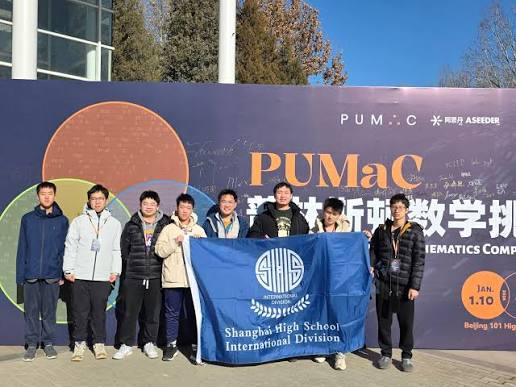
This guide covers PUMaC math competition in full. The Princeton University Mathematics Competition (PUMaC) is an annual mathematics competition for high school students hosted by undergraduates at Princeton University. Held each November on Princeton's campus, PUMaC features both individual and team rounds across two divisions, drawing several hundred students from across the United States and internationally. The competition emphasizes creative problem-solving across algebra, geometry, number theory, and combinatorics.
Competition Structure and Format
PUMaC organizes students into teams of up to eight members. Each team competes in one of two divisions: A-division or B-division. The competition runs for a full day and consists of three distinct components.
Individual Rounds
Each competitor takes two individual subject tests. Students select from four subjects:
- Algebra: Polynomials, functional equations, inequalities, sequences
- Geometry: Synthetic geometry, coordinate geometry, transformations
- Number Theory: Divisibility, modular arithmetic, Diophantine equations
- Combinatorics: Counting, graph theory, discrete probability, combinatorial games
Each individual test contains eight problems. Students have 60 minutes per test. Problems range from accessible entry points to challenging questions requiring insight beyond standard competition techniques. Partial credit is not awarded; each problem receives full credit or none.
Power Round
The Power Round is a team proof-writing event lasting two to three hours. Teams receive a packet exploring a single mathematical theme in depth—often a topic outside the standard competition curriculum. The packet guides teams through a sequence of scaffolded problems, building toward sophisticated results.
Recent Power Round topics have included:
- Projective geometry and cross-ratios
- Generating functions and recurrence relations
- Lattice paths and determinant identities
- Algebraic graph theory
Teams submit written solutions with complete justifications. Graders evaluate mathematical rigor, clarity of exposition, and correctness. The Power Round distinguishes PUMaC from competitions focused solely on rapid problem-solving; it rewards collaborative work and mathematical communication.
Team Round
In the Team Round, all team members work together on a single problem set. The round typically lasts 45 minutes and contains problems requiring coordination: some may ask for multiple related answers, while others benefit from dividing work strategically.
Effective teams develop systems for communication, task allocation, and answer verification under time pressure. The Team Round tests not just individual strength but collective problem-solving efficiency.
Divisions and Eligibility
The rest of this guide works through the PUMaC math competition in the order the material becomes useful.
PUMaC offers two divisions to accommodate different experience levels. Students form teams of up to eight members from the same school or organization.
A-Division
The A-division is the standard competition level. Any high school student may compete in A-division regardless of prior competition experience. Problems assume familiarity with techniques common in competitions like AMC 10/12, AIME, and early USAMO/USAJMO problems. The difficulty progression within each test spans from moderately challenging to quite difficult.
B-Division
The B-division serves as an introductory level for students newer to competition mathematics. Eligibility restrictions ensure appropriate difficulty: students who have qualified for USAMO or USAJMO in any prior year may not compete in B-division. Additionally, students who have taken the AIME more than once typically compete in A-division, though specific eligibility rules should be verified during registration.
B-division problems are more accessible than A-division but still require problem-solving creativity beyond typical coursework. The B-division Power Round explores similar themes to A-division but with more scaffolding.
Scoring and Awards
Team scores combine individual round scores, the Power Round score, and the Team Round score. The weighting of components varies by year but typically gives substantial weight to both individual performance and collaborative rounds.
Individual round scoring: Each correct answer receives a fixed point value. A student's individual score is the sum of their two subject tests. Team individual scores aggregate all team members' individual scores.
Power Round scoring: Graders assign points to each problem based on correctness and proof quality. Partial credit is available for incomplete or partially correct solutions. The Power Round often contributes significantly to final team standings, especially among top teams.
Team Round scoring: Similar to individual rounds, with points per correct answer.
Awards recognize both team and individual achievement. Top teams in each division receive trophies. High-scoring individuals across all subjects receive recognition, and top scorers in each individual subject receive subject awards. All participants receive feedback on their performance.
Registration Process and Logistics
What follows covers the PUMaC math competition in detail, from the format through to the final weeks of preparation.
Registration for PUMaC opens several months before the November competition date. Teams register through the official PUMaC website. Each team designates a coach or advisor—typically a teacher or parent—who handles registration and logistics.
Key Registration Information
Teams must register before the stated deadline, which typically falls in October. Late registration may be available but is not guaranteed. During registration, each student selects their two individual subjects. These choices cannot be changed after a cutoff date, so students should consider their strengths carefully.
Registration includes a fee per student. The fee structure and exact amount should be verified on the official website, as these may change. Financial assistance is typically available for students who face barriers to participation.
Competition Day
PUMaC takes place on Princeton's campus in November, usually on a Saturday. The exact date varies by year. Teams are responsible for their own transportation to and from Princeton. The competition provides lunch for all registered participants.
Check-in occurs in the morning. After opening remarks, students proceed to their individual rounds. The Power Round typically occurs mid-day, followed by the Team Round. An awards ceremony concludes the event in the late afternoon.
Parents and coaches may attend but do not participate in competition activities. Princeton students often organize campus tours and information sessions for visitors.
Preparing for PUMaC
Effective preparation for PUMaC requires both individual skill development and team practice, particularly for the collaborative rounds.
Building Individual Skills
For the individual rounds, students should develop fluency with competition problem-solving techniques. A reasonable preparation sequence:
Foundation building: Students newer to competition mathematics should work through AMC 10/12 problems, focusing on problems rated 15 and above in difficulty. This builds the pattern recognition and technique library needed for PUMaC's more accessible problems.
Technique deepening: Progress to AIME problems and introductory olympiad problems. Study standard techniques in your chosen subjects. For example, in combinatorics, master bijections, generating functions, and the inclusion-exclusion principle. In number theory, become comfortable with modular arithmetic, Fermat's Little Theorem, and Diophantine equations.
Problem-solving flexibility: PUMaC problems often require combining techniques or finding unexpected approaches. Practice with problems from other university competitions (HMMT, CMIMC, ARML) and from olympiad problem sets. When studying solutions, focus on the insight that unlocks each problem rather than memorizing methods.
Subject Selection Strategy
Choose your two subjects based on genuine interest and relative strength. Since you take two tests, you can balance a stronger subject with one you wish to develop. Many students choose geometry as one subject due to its distinctiveness from school mathematics, pairing it with algebra, combinatorics, or number theory.
Work through problems from past PUMaC competitions in your chosen subjects. This reveals the flavor and difficulty level you will encounter. Past problems are available on the PUMaC website.
Power Round Preparation
The Power Round requires different skills than speed-solving. Practice by working through past PUMaC Power Rounds as a team. Key skills to develop:
Proof writing: Solutions must be complete and rigorous. Practice writing clear arguments with proper logical flow. State what you are proving, provide justification for each step, and mark conclusions clearly.
Collaborative problem-solving: Divide the packet strategically. Some team members might work on early problems while others read ahead to understand the packet's trajectory. Communicate findings regularly. If someone solves a problem, they should explain the key idea to the team—later problems often build on earlier insights.
Time management: With two to three hours, you cannot solve every problem perfectly. Identify which problems are accessible and which require more time. Secure points on problems within reach before attempting the most difficult questions.
Consider working through Power Rounds from other competitions, such as HMMT or CMIMC, to build stamina for extended proof-based work.
Team Round Practice
The Team Round rewards efficient collaboration. Practice with your actual team if possible. Develop a system:
- Who reads problems aloud initially?
- How do you decide who works on which problem?
- How do you verify answers before submitting?
- How do you reallocate team members if someone finishes their problem?
Run timed practice sessions with past PUMaC Team Rounds or team rounds from other competitions. Afterward, discuss what worked and what could improve. The team that communicates most effectively often outperforms a team of individually stronger but uncoordinated problem-solvers.
Past Problems and Resources
The practical points about the PUMaC math competition are gathered here rather than scattered across the guide.
The official PUMaC website maintains an archive of past competitions, including problems and solutions for individual rounds, Team Rounds, and Power Rounds. These are the single most valuable preparation resource, as they reveal the specific style and difficulty calibration of PUMaC problems.
When working through past papers:
Simulate test conditions: Time yourself strictly—60 minutes for an individual round, 45 minutes for a Team Round. This builds pacing instincts. Many students find they can solve PUMaC problems given unlimited time but struggle to identify the fastest approach under pressure.
Study solutions carefully: After attempting problems, read the official solutions even for problems you solved. Often the official solution reveals a cleaner approach or a generalizable technique you missed.
Identify gaps: If certain problem types consistently challenge you, that indicates a gap in your technique library. Seek out resources targeting that specific topic. For example, if geometry problems involving homothety stump you, work through a problem set focused on transformations.
Beyond PUMaC-specific materials, standard competition problem-solving texts provide technique building. The Art and Craft of Problem Solving by Zeitz offers a framework for developing problem-solving flexibility. Olympiad-level books in specific subjects (such as Euclidean Geometry in Mathematical Olympiads by Evan Chen or A Path to Combinatorics for Undergraduates by Andreescu and Feng) deepen subject expertise.
Frequently Asked Questions
Can I compete individually without a team?
PUMaC requires team registration. However, if you do not have a full team from your school, you may be able to register as a partial team or join with students from other schools. Contact the organizers through the official website to inquire about options for individual students.
Can international students participate?
Yes, PUMaC welcomes international teams. However, teams must travel to Princeton's campus in New Jersey. International teams should plan for visa requirements and travel logistics well in advance.
How does PUMaC compare to HMMT or ARML?
PUMaC, HMMT (Harvard-MIT Mathematics Tournament), and ARML (American Regions Mathematics League) are all team-based high school competitions, but they differ in structure. HMMT offers individual tests, a team round, and a guts round (a rapid-fire relay format). ARML emphasizes team problem-solving and relay rounds. PUMaC is distinguished by its extended Power Round, which emphasizes proof-writing and mathematical exposition more than the others. In difficulty, PUMaC A-division is comparable to HMMT November, while HMMT February is typically harder.
What if I can't attend in person?
PUMaC is an in-person competition held at Princeton. There is no remote participation option. Students unable to travel to Princeton might consider online competitions or regional contests.
How competitive is admission to the competition?
PUMaC does not have an admissions process based on qualification scores. Registration is open to all eligible teams on a first-come, first-served basis until capacity is reached. Register early when registration opens to ensure your team's spot.
Will participating in PUMaC help with college applications?
PUMaC participation demonstrates interest in mathematics and teamwork. Strong performance—particularly winning an award—provides evidence of mathematical ability. However, PUMaC is one of many competitions, and college admissions committees evaluate applications holistically. Participate in PUMaC because you enjoy collaborative problem-solving and wish to challenge yourself mathematically, not solely for application credentials.
What should I bring on competition day?
Bring pencils, erasers, and scratch paper (though scratch paper is typically provided). Geometric tools like rulers, compasses, and protractors are allowed but rarely necessary—PUMaC problems are designed to be solved without measurement. Calculators are not permitted. Bring a water bottle and any snacks you might want outside of the provided lunch. Dress comfortably for a full day of mathematics.
Why PUMaC Matters for Your Development
PUMaC offers something many competitions do not: a balance between individual technical skill and collaborative mathematical exploration. The Power Round, in particular, exposes you to mathematics beyond the competition canon. You might encounter projective geometry, generating functions, or algebraic structures that do not appear in standard curricula. This breadth matters. Mathematics is not only about solving problems quickly; it is about understanding structures, building arguments, and communicating ideas.
The team format teaches you to work with others under pressure. In mathematical research and in many careers, collaboration is essential. Learning to explain your thinking, to listen to others' approaches, and to coordinate toward a common goal are skills that extend far beyond competition mathematics.
For students preparing for olympiads like USAMO, PUMaC provides valuable practice with proof-writing in a timed setting. For students exploring whether they enjoy mathematics deeply, PUMaC offers a window into the creativity and beauty of the subject beyond computational facility.
Prepare thoroughly, work with your team, and approach PUMaC as an opportunity to learn. The problems you struggle with teach more than the problems you solve immediately. The experience of working through a challenging Power Round packet with teammates, building understanding step by step, captures something essential about what mathematics is: a collaborative human endeavor to understand structure and pattern.
Related reading
Questions people ask
Can I compete individually without a team?
PUMaC requires team registration. However, if you do not have a full team from your school, you may be able to register as a partial team or join with students from other schools. Contact the organizers through the official website to inquire about options for individual students.
Can international students participate?
Yes, PUMaC welcomes international teams. However, teams must travel to Princeton's campus in New Jersey. International teams should plan for visa requirements and travel logistics well in advance.
How does PUMaC compare to HMMT or ARML?
PUMaC, HMMT (Harvard-MIT Mathematics Tournament), and ARML (American Regions Mathematics League) are all team-based high school competitions, but they differ in structure. HMMT offers individual tests, a team round, and a guts round (a rapid-fire relay format).
What if I can't attend in person?
PUMaC is an in-person competition held at Princeton. There is no remote participation option. Students unable to travel to Princeton might consider online competitions or regional contests.
How competitive is admission to the competition?
PUMaC does not have an admissions process based on qualification scores. Registration is open to all eligible teams on a first-come, first-served basis until capacity is reached. Register early when registration opens to ensure your team's spot.
Will participating in PUMaC help with college applications?
PUMaC participation demonstrates interest in mathematics and teamwork. Strong performance—particularly winning an award—provides evidence of mathematical ability. However, PUMaC is one of many competitions, and college admissions committees evaluate applications holistically.
Get a study plan for this
Tell us the class and what they are working towards, and we will send a plan built around it, plus the next free trial class. No cost, and we will not pass your details on.